

We’re excited to announce the availability of hosted·ai v2.0.1, with new features to make GPUaaS even easier to manage and sell. Let’s get into it!
#BuildingInPublic – the platform story so far
In August 2025 we released hosted·ai v2.0, which consolidated many stability and security improvements we brought to the platform throughout the year. We consider that to be our first stable release, and we generally have a monthly release cycle – so from now on, we’ll talk each month about new features in the platform, and what’s coming next.
New to hosted·ai? Learn more about our GPU cloud platform or get in touch for a demo.
What’s new in v2.0.1?
1. Tune your GPU pools for different workloads
hosted·ai handles GPU very differently to other GPUaaS platforms. Our GPU control plane enables 100% GPU utilization by combining individual GPUs into pools, and allowing the resources of the entire pool to be shared with multiple tenants at once.
The hosted·ai platform has an extremely efficient task scheduler that context-switches tasks in and out of physical GPUs in the pool – but, how is this scheduling controlled?
Introducing… the new GPU optimization slider.
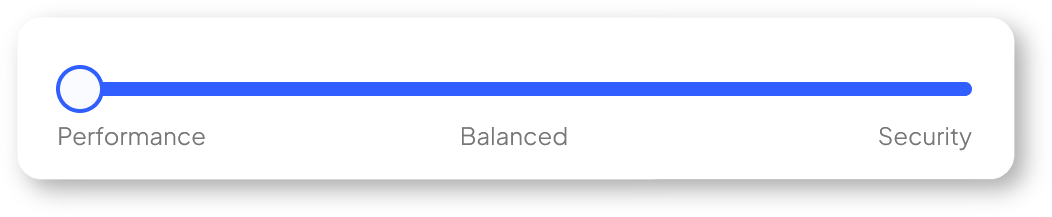
When you create a GPU pool, you assign GPUs to the pool and choose the sharing ratio – i.e. how many tenants the resources of the pool can be allocated/sold to. For any setting above 1, the new optimization slider becomes available.
Behind this simple slider is a world of GPU cloud flexibility. The slider enables providers to configure each GPU pool to suit different customer use cases. Here’s a quick demo from Julian Chesterfield, CTO at hosted·ai:
- GPUaaS optimized for security
Temporal scheduling is used. The hosted·ai scheduler switches user tasks completely in and out of physical GPUs in the pool, zeroing the memory each time. At no point do any user tasks co-exist on the GPU. This is the most secure option, but comes with more performance overhead.
- GPUaaS optimized for performance
Spatial scheduling is used. The hosted·ai scheduler assigns user tasks simultaneously to make optimal use of the GPU resources available. There is no memory zeroing. This is the highest-performance option, but it doesn’t isolate user tasks – they are allocated to GPUs in parallel. - Balanced GPUaaS
Temporal scheduling is used, but without fully enforced memory zeroing. This provides a blend of performance and security.
Why is this important?
Service providers need the flexibility to handle any mix of heterogeneous workloads. That’s just as true for GPUaaS as it is for traditional IaaS cloud and hosting.
Your GPUaaS needs to cater to a range of price/performance targets for different AI model training, tuning and inference use cases, as well as customers in simulation, gaming, research and so on.
The hosted·platform enables you to configure your infrastructure and services accordingly:
- Creating pools of different GPU classes
- Configuring the sharing, security and performance characteristics of each pool
- Configuring pricing and other policies for each pool
- Enabling customers to subscribe to any mix of pools for different workloads
2. Self-service GPU / end user enhancements
Also in this release, some handy improvements for end users running their applications in your hosted·ai environments:
GPU application service exposure
We’re made it easier to expose ports for end user applications and services through the hosted·ai admin panel (and coming soon, through the user panel).
Now your customers can choose how they present their application services to the outside world, through configurable ports
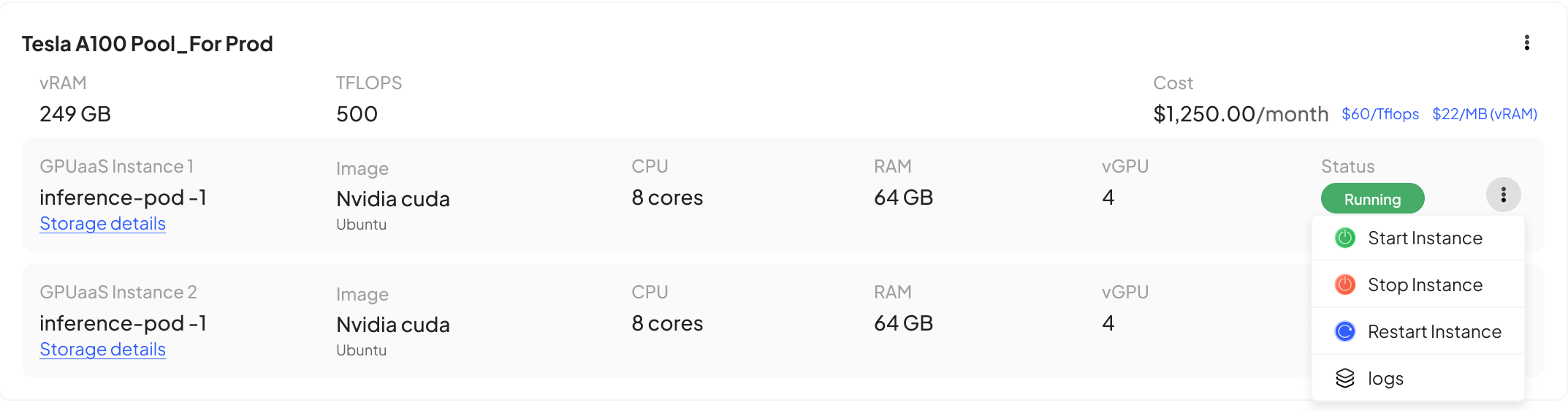
Self-service GPU pool management
We’ve added new management tools for your customers too. Each GPU resource pool they subscribe to can be managed through their user panel, with visibility of the status of each pod; the ability to start, stop and restart pods; and logs with information about the applications using GPU.
Why are these things important?
These enhancements are part of our mission to make GPUaaS as fast and frictionless as possible for your end users (e.g. nobody should be forced to use CLI and dive into K8s just to restart a service)
3. Furiosa device integration
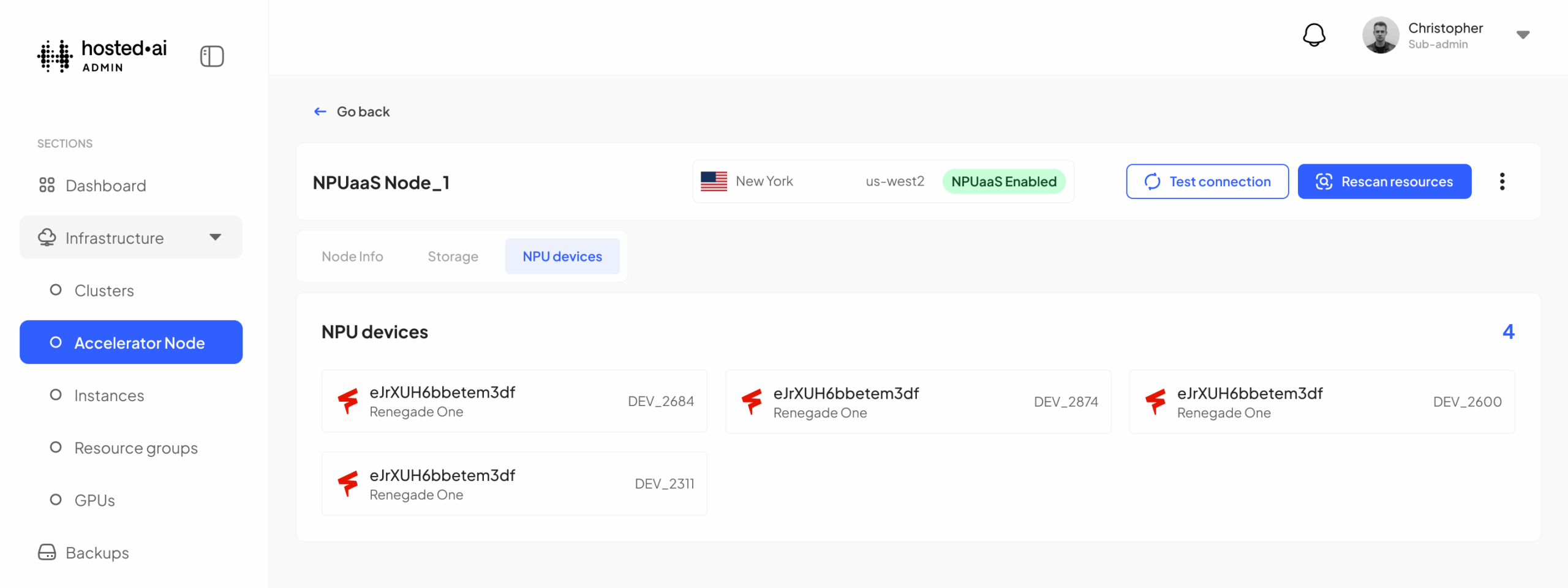
In July 2025 we announced our partnership with Furiosa, a semiconductor company specializing in next-generation AI accelerator architectures and hardware. We’ve been working to bring Furiosa device support to hosted·ai and this is now available in v2.0.1.
Now service providers can create regions with clusters based on Furiosa, as well as NVIDIA. Once a region has been set up for Furiosa, it can be managed, priced and sold using the same tools hosted·ai makes available for NVIDIA – and in future, other accelerator devices.
Why is this important?
Furiosa’s Tensor Contraction Processor architecture is designed to maximize performance per dollar and per watt for generative AI workloads. The hosted·ai platform is designed to be accelerator-agnostic to give service providers flexibility in the AI infrastructure they build and sell. It’s all about flexibility to meet different use cases at different price/performance points.
More information:
- New to hosted·ai? Get in touch for a chat and/or demo
Coming next:
In final testing now – subscribe for updates:
- Full stack KVM – complete implementation, replacing Nexvisor
- Scheduler credit system – expanding GPU optimization with a credit system to deliver consistent performance for inference in mixed-load environments
- Billing enhancements – more additions to the hosted·ai billing and metering engine – more ways to monetize your service
- Infiniband support